Home › Industrial and Heavy-Duty Asphalt Paving
Reliable, professional industrial asphalt paving in Lubbock, TX from Precision Asphalt Lubbock. Contact us today for a free on-site estimate.
Precision Asphalt Lubbock provides professional industrial asphalt paving throughout Lubbock, TX, Texas and the surrounding area. Our licensed, insured crew delivers safe, clean, on-time work with a free estimate before anything begins. Call (806) 230-5982 or request your free quote.
Industrial Asphalt Paving Built for Lubbock Workloads
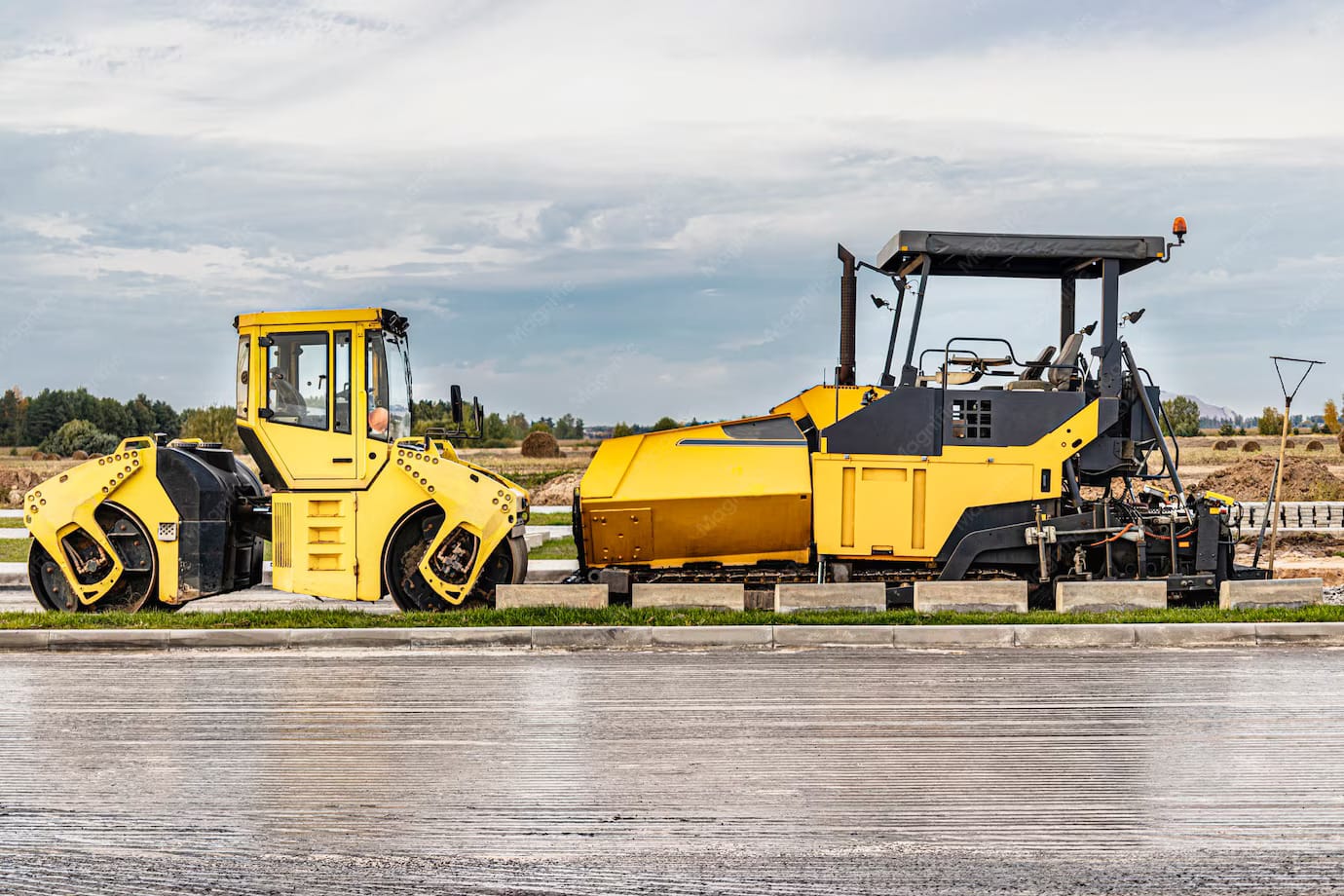
Precision Asphalt Lubbock focuses on industrial asphalt paving that holds up to real abuse: loaded semis, forklifts, farm equipment, oilfield rigs, and constant turning traffic. We are based here in Lubbock, so we design every heavy-duty surface around local soils, local traffic patterns, and our harsh freeze-thaw cycles.
Industrial and heavy-duty asphalt paving is not the same as paving a residential driveway. For industrial lots, we engineer the asphalt thickness, base depth, and mix type for specific loads and turning movements. A loading dock that sees steel-tracked equipment gets a different design than a warehouse employee lot. We look at axle loads, storage habits, and how often you expect deliveries, then build a pavement structure that can realistically take that punishment for years.
Our team understands how Lubbock clay expands when it gets wet, then shrinks when it dries out. If the base under your asphalt is not built to handle that movement, you get rutting, random cracking, and potholes long before you should. We are blunt about what your site needs, including excavation and base upgrades, so you do not end up paying for constant patching later.
How We Design Heavy-Duty Asphalt Systems
Every industrial asphalt paving project starts with a site walk and a load evaluation. Precision Asphalt Lubbock looks at your existing surface, drainage paths, and traffic routes, then asks what is changing on your property in the next 5 to 10 years. A facility expecting heavier trucks or new equipment needs a pavement section that is ready for that increase, not just what you have today.
We start by classifying traffic (light, medium, or heavy industrial), then estimate equivalent single axle loads for your site. Based on that, we determine total pavement thickness and how much of that should be base versus asphalt. A typical light industrial drive lane might get 6 inches of compacted base and 3 inches of asphalt placed in two lifts. A heavy truck court or dumpster pad might need 10 to 12 inches of stabilized base and 4 to 5 inches of asphalt in multiple lifts, or a concrete reinforcement strip in the highest stress zones.
Mix selection is critical. In Lubbock, high summer temperatures can soften cheaper asphalt mixes and lead to rutting in truck paths. We specify mixes with higher quality aggregates and the right performance grade (PG) asphalt binder for our climate. In high-shear locations, such as tight turning areas at docks, we may recommend a finer surface mix over a coarser, stronger base mix to improve resistance to shoving and surface tearing.
We also pay close attention to slope and drainage in the design. Industrial yards often get built dead-level for operations, but flat pavement holds water and accelerates failure. We introduce subtle, controlled slopes toward inlets or swales so water leaves the surface quickly, while still allowing trucks and forklifts to operate safely.
Step-by-Step: Our Industrial Paving Process
The heavy-duty paving process with Precision Asphalt Lubbock is structured and predictable so operations on your site are disrupted as little as possible.
1. Evaluation and core sampling: On larger or high-value projects, we recommend coring the existing pavement or soils so we know exactly what we are working over. This helps us determine whether we can mill and overlay, or whether full-depth reconstruction is necessary.
2. Excavation and subgrade preparation: We remove failing pavement and any unstable base material. Soft spots, pumping areas, or zones where trucks have created deep ruts are cut out deeper and rebuilt. The exposed subgrade is compacted to a specified density and tested where needed.
3. Base installation and stabilization: We install crushed base material in layers, compacting each lift with vibratory rollers. In areas with poor native soils or very heavy loads, we may recommend lime or cement stabilization, or a geotextile fabric under the base to keep the structure separated from the clay.
4. Fine grading and proof rolling: Before paving, we fine grade for slope and run a loaded truck or proof roller over critical areas. If the base deflects or pumps under load, we fix that before the first ton of asphalt is placed.
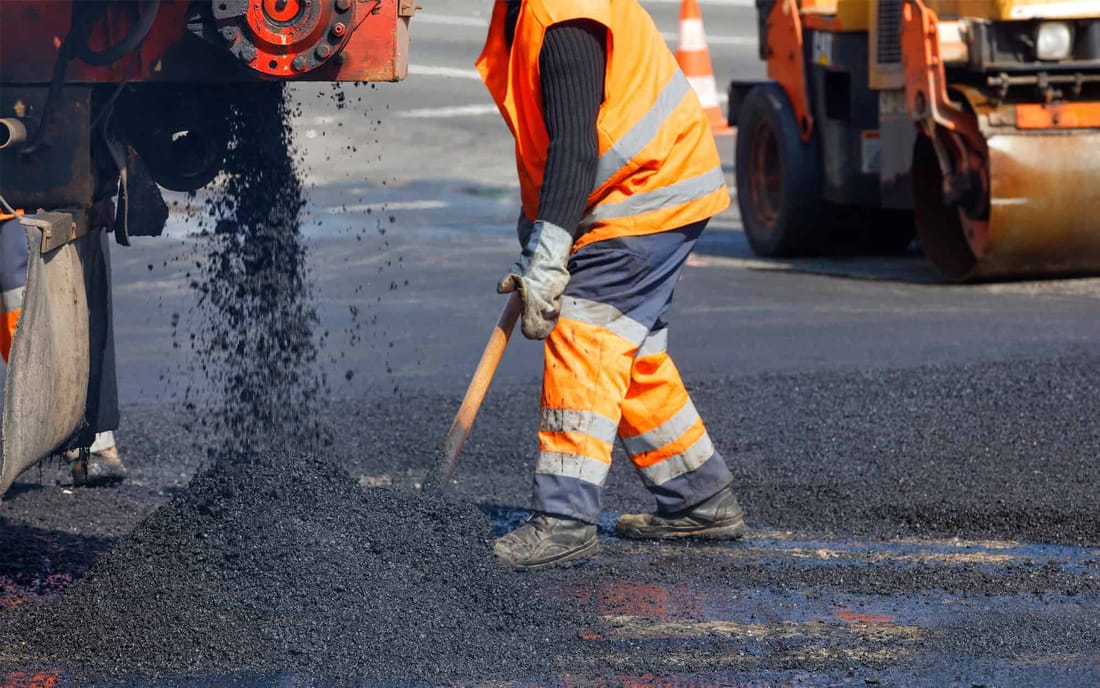
5. Asphalt placement in multiple lifts: For industrial asphalt paving, we nearly always use more than one lift. A strong base course goes down first, then a tighter surface course. Each lift is placed at the right temperature, compacted with steel-wheel and pneumatic rollers, and checked for smoothness and joint quality.
6. Final compaction and quality checks: We verify slopes for drainage, check joints where new asphalt ties into existing pavement, and look for any early surface issues such as tearing or slippage. Only then do we stripe and open the area to traffic, usually in phases so your operation keeps running.
What Drives Cost on Industrial Asphalt Paving Projects
Many industrial property owners want to understand why two bids can be thousands of dollars apart. Precision Asphalt Lubbock is direct about the factors that actually move the price on large-scale asphalt work so you can compare proposals fairly.
Base depth and stabilization are the biggest drivers. A design with 6 inches of base under 3 inches of asphalt will cost far less up front than a design with 10 inches of stabilized base and 4 inches of asphalt, but the cheaper section may not survive your trucks. We explain exactly what is being proposed under the surface, not just the asphalt thickness, because that is where most failures start.
Access and phasing also affect cost. If we can pave a truck yard in large, open passes with minimal obstacles, production is efficient and pricing reflects that. Tight spaces, constant traffic that cannot be rerouted, or night and weekend work add labor and time. We work with Lubbock manufacturers, warehouses, and ag facilities to build realistic phasing that balances cost with operational needs.
Material choice and mix design influence cost too. Higher performance mixes with quality aggregate and polymer-modified binders cost more per ton, but in high-load applications they often save money over the life of the pavement. We present options in plain language, including what you gain and what you risk with each.
Existing conditions matter. If your current lot is severely alligatored, holding water, or has been patched for years, we may recommend milling and full-depth replacement in the worst areas instead of trying to seal everything under a thin overlay. It is usually better to fix structural issues once than to keep funding short-lived band-aids.
Local Timing, Climate, and Common Problems in Lubbock
Industrial asphalt paving in Lubbock has to be scheduled around our local weather patterns to get long-term performance. The best paving windows are generally in spring and fall when temperatures are moderate and we avoid the most extreme heat. In midsummer, we take extra care with compaction timing and mix temperature so the asphalt does not cool too fast on wind-exposed sites or stay too soft and track under slow, heavy loads.
Wind is a real factor here. Strong plains winds can dry out and cool asphalt lifts quickly, especially on open industrial lots. Precision Asphalt Lubbock coordinates delivery timing and roller patterns with the plant so each load can be placed and compacted within the optimal temperature range, even when the wind picks up.
Common local problems include premature cracking along joints, rutting in wheel paths from feed trucks or semis, and failure at dumpster pads and loading docks. We address these by upgrading the pavement structure where the stress is highest, using thicker sections or even rigid pads in front of dock doors, and paying extra attention to joint construction. Long, continuous cold joints in heavy truck lanes are avoided or reinforced.
Drainage is another key issue. Lubbock can see intense storms, and standing water on industrial pavement penetrates cracks and accelerates base failure. As part of every project, we look at gutters, inlets, and surface flow. Often, minor grading changes and a few additional inlets or swales are enough to prevent water from sitting in traffic lanes and loading areas.
What to Ask Before You Hire an Industrial Paving Contractor
Industrial asphalt paving is a long-term investment in your facility. Before you sign a contract, Precision Asphalt Lubbock suggests you ask every bidder a few direct questions so you know what you are getting.
Ask for the proposed pavement section in writing, including base type and thickness, any stabilization, and each asphalt lift. If a proposal only lists a top-layer thickness and says nothing about base, you are missing the most important information. Request clarification on what they will do with soft spots or visibly failed areas.
Find out how they will manage your operations while work is underway. A reliable contractor will present a phasing plan, expected closure times for each area, and how they will handle emergency access for trucks and staff. For 24 hour operations, ask about night or weekend options and how that affects cost.
Request references specifically for industrial or heavy truck projects, not just residential or small commercial jobs. In Lubbock, you should be able to see examples at local warehouses, ag facilities, and trucking yards. Walk those sites if possible and look at high stress areas like entrances and dock aprons.
Finally, discuss maintenance. A good industrial pavement plan includes a schedule for sealcoating, crack sealing, and localized patching. We provide straightforward guidance on how often to inspect, what early signs of distress to watch for, and how to budget for maintenance so you extend pavement life instead of waiting until full replacement is the only option.